2025 year in review, Part 2. – Guesswork doesn’t work!
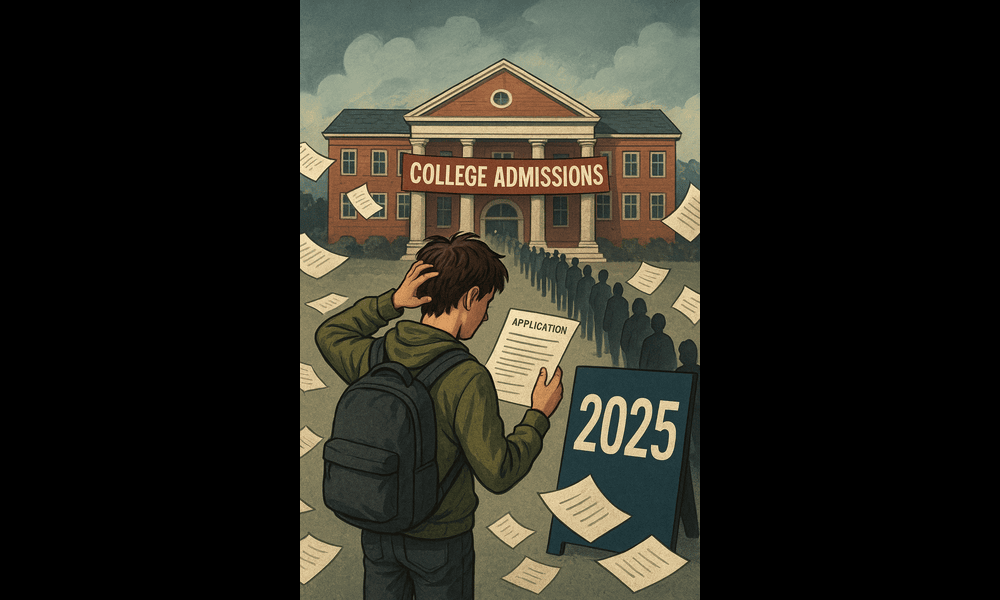
It’s long been said that choosing the right college and major is one of the two most important things in a person’s life. The other- choosing a partner for marriage.
It is more important than buying a house, although buyers of houses will exercise far more diligence and understanding than do buyers of a college education — Parents.
Think about it, when searching for and evaluating a new home purchase, who is your primary source for information? Certainly not the seller. But when it comes to buying a college education, parents will use the college as their primary resource.
That is buying right into their interests, not yours. I call that taking the bait. Parents, don’t be a fish.
Let’s evaluate the bait. From attending information sessions, what have you heard regarding the “Job Placement Rate” of its students…90%, 95%?
How does that make you feel when you hear it? Parents have told me that it makes them feel the college will be worth it. Oh, what a mistaken feeling!
If you were to ask them how they track it and if they gave you an honest answer, they would say, “We have no idea. We are just told to say it. We know people will believe it.”
Do you believe it?
If so, where on a college campus is there an office staff dedicated to tracking the jobs of its graduated students? What resources are provided for that?
The answer is, there’s no such staff and no resources. Never in history has a college ever had anything close to a 90% job placement rate. Yet, parents put their faith and belief in that possible outcome. It’s just bait and parents swim right towards it… don’t be a fish.
It then continues with the tour where they show you what they want you to see and tell you what you want to hear. Ask them if you can speak with a professor for a few minutes. Professor? They wouldn’t know what to do.
The point is that here in 2025 with costs of college ranging from $250,000 – $400,000 over four years, parents have to know better. Parents have to be savvy to understand the college’s intentions—to get more money out of you. And they know how to do it.
Unless you decide otherwise, they own the process and own the outcome. Yet, they are the seller. You are the buyer. You would never let that happen when buying a house.
Parents don’t make many mistakes when buying a house. Why not? Because they know the process. You know to take certain proper precautions. You have a realtor to show you the right homes. You hire attorneys to make sure you don’t miss anything. When using a bank, they even make sure that you don’t overpay.
However, parents make many mistakes when buying a college education. Why so? They don’t know the process. Parents miss out on steps to take along the way despite the fact that parents know this time has been coming for many years.
Without having someone playing the role of a realtor, banker, and attorney to oversee the purchase commitment, predictable mistakes are made and excessive costs incurred.
Parents of kids attending elite universities- Georgetown, Emory, UCLA, Cornell, and many others will call me after 3 years and ask, “Why aren’t they helping my child get a job?“
I ask them, “Why do you expect them to do that?“
They are in the business of selling educational products. You are in the business of buying educational products. Getting your child a job is you and your child’s responsibility, not theirs.
The three most important things in this process to protect with fierce determination are-
- Choosing the right college for the right reasons
- Choosing the right studies for the right reasons
- Paying the right price for the sake of the family bank
How are you going to search, visit, evaluate, explore, and ultimately, choose the right college? I track and follow 500 colleges. What do you know about the college landscape other than elite names and rankings that don’t reflect an ounce of interest to you.
Do you know what goes into a ranking? Connect with me to discuss this further if you’d like.
Are you going to rely on your high school’s guidance counselor or Naviance system to produce a college list for your child? That’s a big mistake.
Are you going to let your child choose a college when they know little about colleges and less about the total college experience? If outcomes are important to you, that’s a bigger mistake.
With the rising costs in 2025, I encourage you to become highly engaged in understanding the college landscape a whole lot better. Or, have a well informed advocate, such as me, on your side.
Shifting here, what’s the most common response when students are asked, “What would you like to study for college?”
If you open your ears, you will hear it over and over again, either “I don’t know” or “I’m undecided.“
That response is the reason why the national average length of time it takes to graduate in a 4-year degree is over 5.5 years and it’s highly predictable. Who budgets for that? Beware, it’s often part of the college plan for your child to spend an extra year in school. One or two changes in majors will see to that.
“I don’t know” or “I’m undecided” is not the platform for an on-time, on-budget, meaningful degree.
Students and parents don’t dedicate time and thought to exploring the various possibilities. Rather, it’s all too often left to random-chance, a game of chase, and some unfortunate persuasion in the academic advising office.
Well, that doesn’t have to be your story.
None of these things are the story of my students and their parents. They are knowledgeable, informed, involved, and engaged. When it’s time to make decisions, their best decisions are made. It’s okay if things change afterward, but it’s not okay to make random-chance choices along the way.
Guesswork doesn’t work!
Would you like to eliminate all guesswork? Let’s talk.
| Hans- CollegeLogic Office # 203.470.3704, hans@mycollegelogic.com |